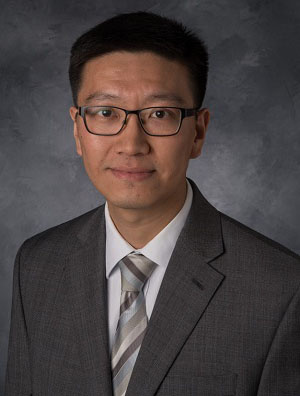
Three years ago, Haifeng Qian began his role as director of the School of Planning and Public Affairs (SPPA) on the first day of the fall semester. As his fourth year leading the school starts today, Qian reflects on SPPA’s progress, the people who have made that progress possible, the challenges ahead, and what he finds most rewarding about the role.
Why were you interested in the school director position three years ago?
SPPA has a great tradition of training the next generation of leaders in public service, especially for local governments in Iowa and beyond. That mission has always inspired me. As a public affairs school at a Big Ten university, SPPA has strong potential to serve as a national model for public service education, scholarship, and outreach. When the director position opened three years ago, I felt prepared to take on the challenge of helping the school build on its strengths and move forward. I was excited and honored to be selected.
What was your top priority as school director over the past three years?
My top priority has always been our people—more specifically, the success of our faculty, students, and staff.
SPPA is fortunate to be home to some leading scholars in our field. I have tried to provide as much support as possible, especially for junior faculty, while maintaining the standards and accountability necessary for SPPA to grow as a prominent public affairs school. Our faculty have had a very strong three years in both publications and external grants.
For our students, I have focused on continuously improving the quality of their education and securing more resources for their professional development. For example, thanks to increased alumni support, the travel funding available to each graduate student during their program of study is now four times what was available to an SPPA student four years ago.
For our staff, two of our three current staff members were hired during my first year as director. We have a very capable team. I have worked with them to streamline the school’s administrative work, reduce unnecessary stress, and support their professional and career development.
What are some SPPA accomplishments that stand out to you from the past three years?
I’m proud of what our faculty, staff, and students have collectively accomplished. SPPA has strengthened its financial position, with tuition revenue increasing by approximately 50 percent as our course enrollment have grown. We completed a new five-year strategic plan and achieved initial accreditation for the Master of Public Affairs degree at the earliest possible opportunity. Both of our flagship graduate programs have also achieved or maintained their highest national rankings, and we have expanded our interdisciplinary partnerships across campus.
We also secured additional resources for the Iowa Initiative for Sustainable Communities, or IISC, which is housed in SPPA, and expanded its staff. IISC is one of the University of Iowa’s most impactful community engagement programs, and I believe it is well positioned to become a community engagement hub for the UI campus.
What are some challenges SPPA is facing, and how do you plan to address them?
As a Graduate College unit, SPPA primarily provides professional education through our urban planning and public affairs graduate programs. Nationally, both fields have experienced enrollment declines in recent years. The challenge is even greater for programs like ours that are not located in a large metropolitan area or a state capital.
After focusing heavily on faculty and staff hiring, program accreditation, and strategic planning during the past three years, our focus this academic year is on strategic recruitment and marketing. We want to strengthen our student recruitment capacity and communicate more effectively what makes our programs distinctive.
At the same time, we know there is strong demand for public policy education among University of Iowa undergraduates. To support the school’s long-term financial sustainability, we will continue to expand partnerships with other colleges to help meet that demand. This fall, for example, we are launching a Public Affairs field of study within the Ethics and Public Policy major in the College of Liberal Arts and Sciences. We will continue looking for collaborative opportunities that benefit both SPPA and our campus partners.
What is the most fulfilling part of your work as school director?
Seeing our students succeed, especially when they secure their first professional job and begin putting what they learned at SPPA into practice. That is one of the most rewarding parts of this work.
What do you enjoy doing outside of work?
I love traveling with my wife and our two daughters. I also enjoy walking our miniature poodle. And I watch movies—lots of them.